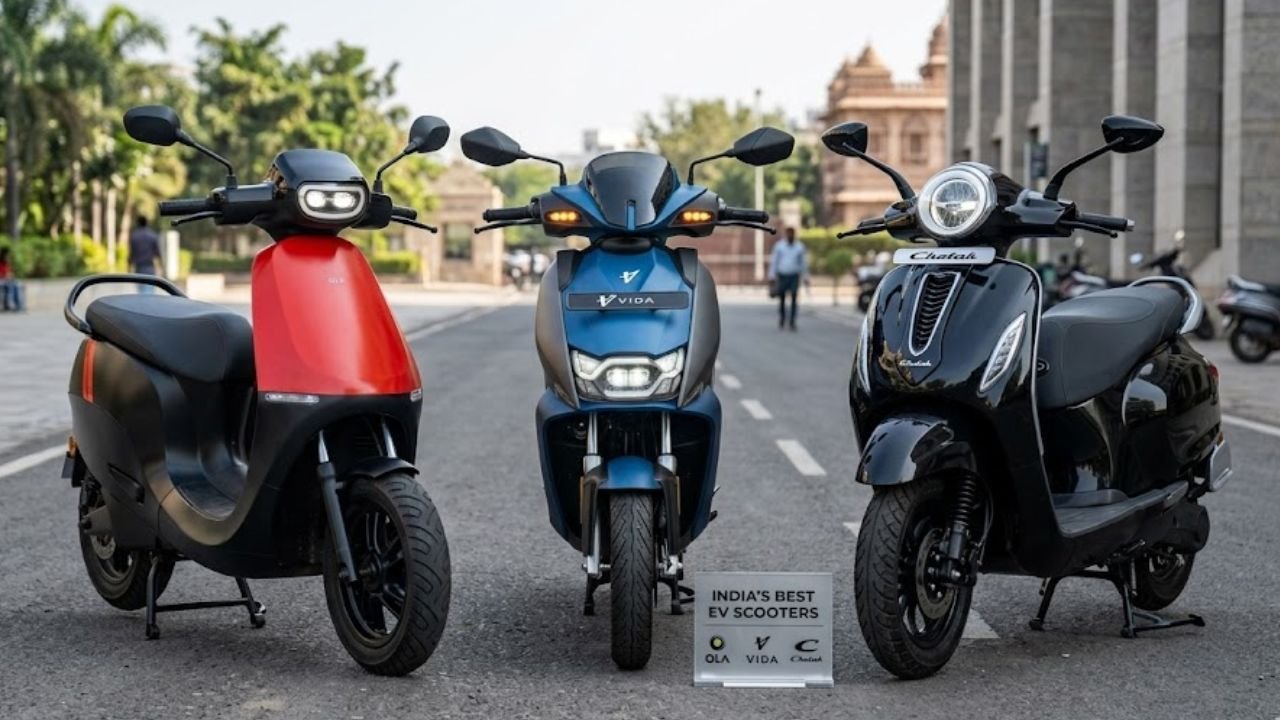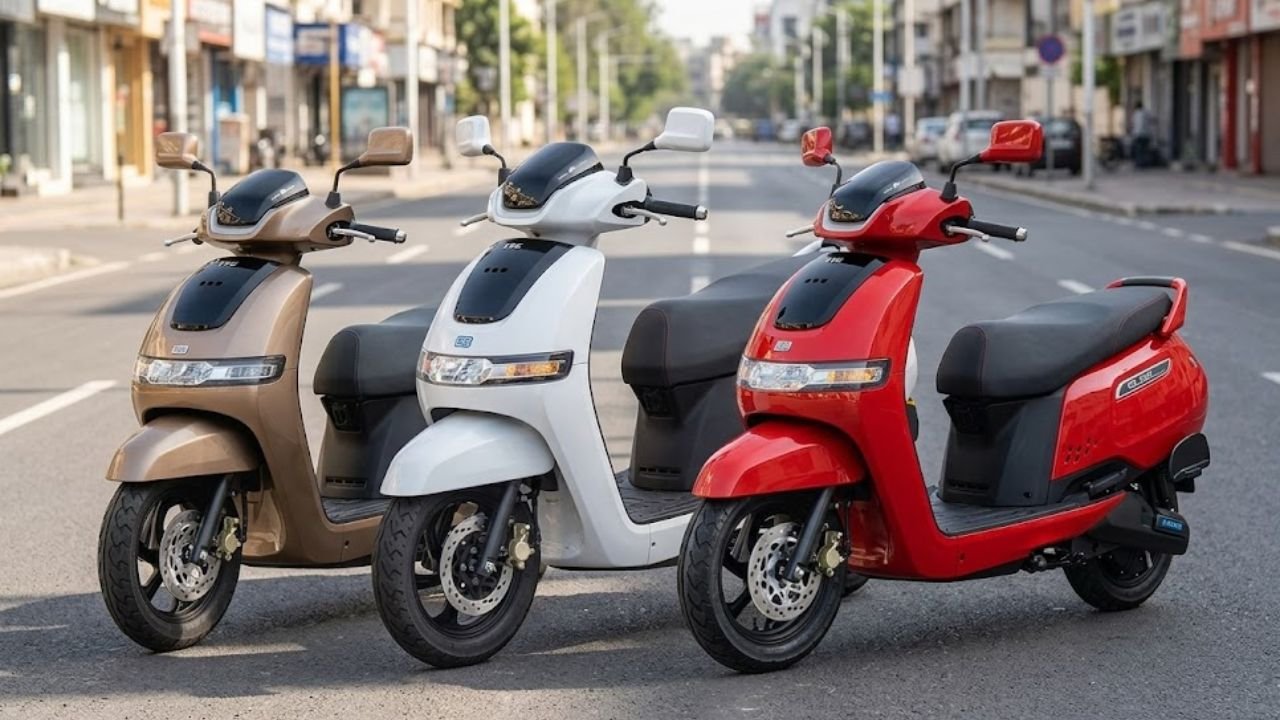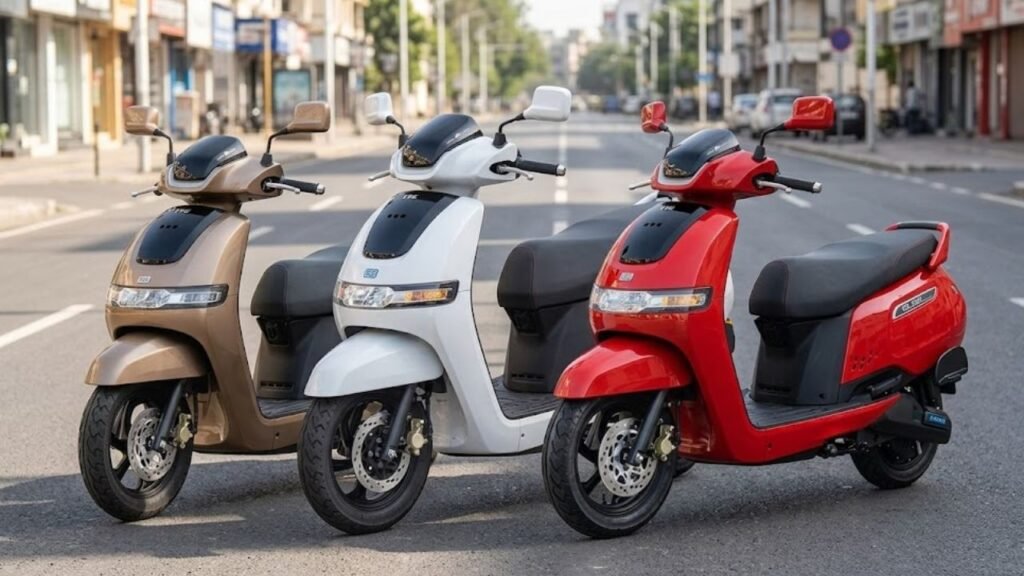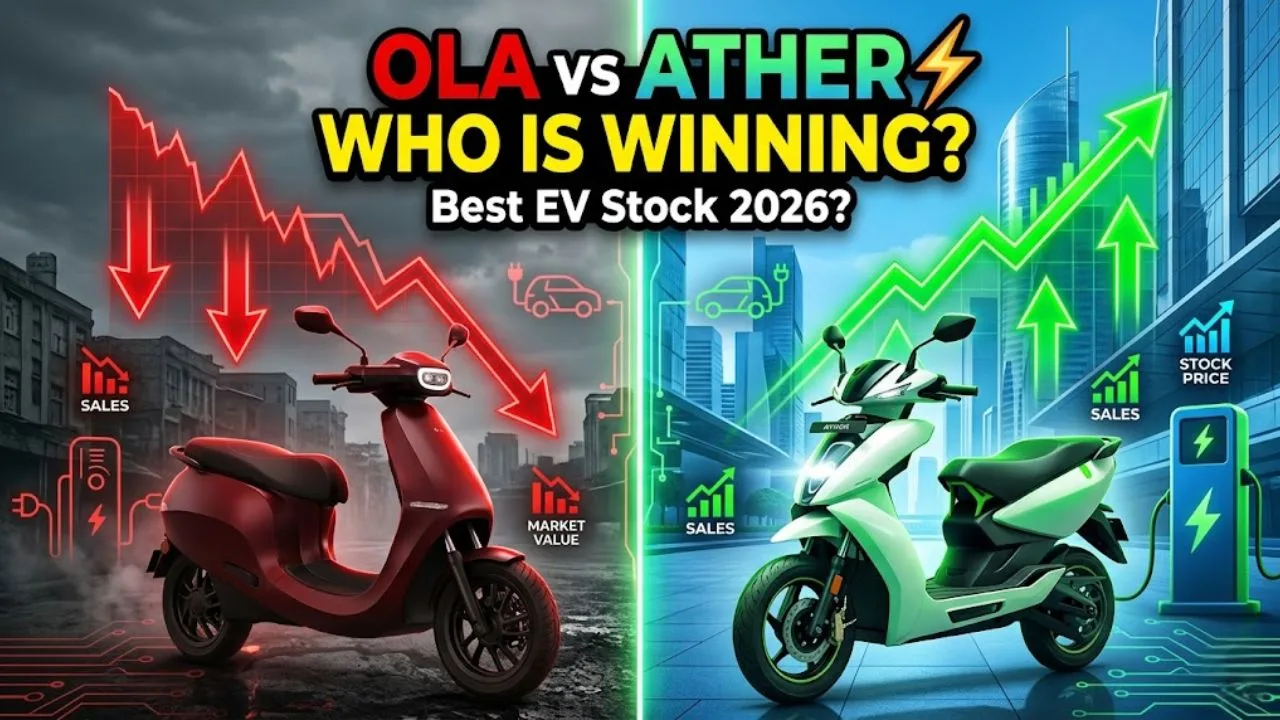
India’s electric two-wheeler market is heating up fast, and right now, two names dominate every investor and buyer conversation: Ola Electric and Ather Energy. Both companies started with big dreams and bold promises. However, their paths in FY26 could not look more different. So, if you are wondering which EV stock or brand deserves your attention right now, this detailed breakdown will help you decide with confidence.
Contents
- 1 Ola Electric vs Ather Energy: Q3 FY26 Performance Compared
- 2 Market Share Shift: Ather Gains While Ola Loses Ground
- 3 Why Ola Electric Still Has a Fighting Chance
- 4 Why Ather Energy Looks Like the Stronger Bet Right Now
- 5 Customer Trust: The Invisible Factor That Changes Everything
- 6 Who Should You Back in 2026?
- 7 FAQs
Ola Electric vs Ather Energy: Q3 FY26 Performance Compared
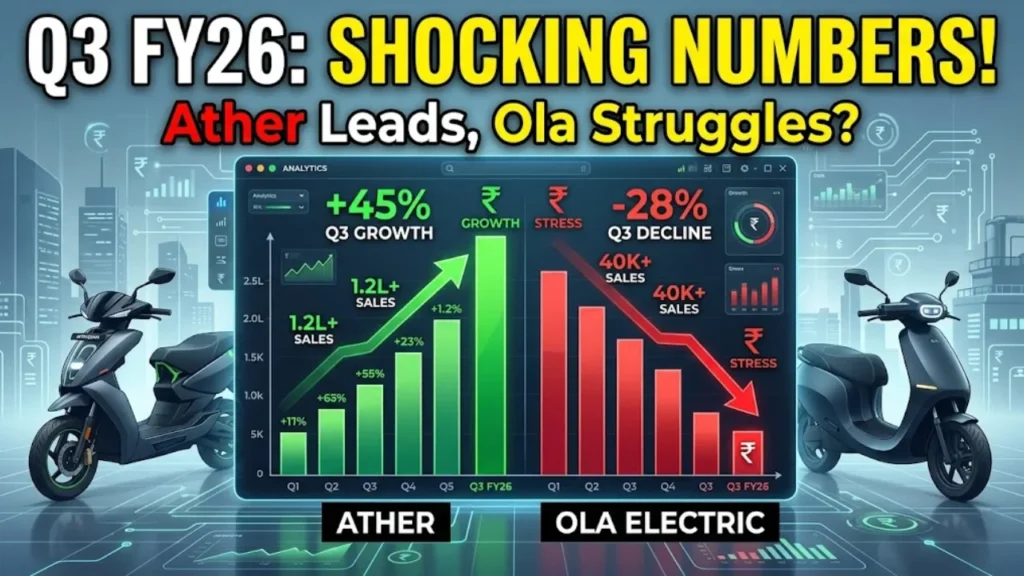
To truly understand where each company stands, we first need to look at the hard numbers. Moreover, the Q3 FY26 data tells a very clear story about execution, growth, and financial health.
| Metric | Ola Electric | Ather Energy |
|---|---|---|
| Units Sold | 32,680 | 68,000 |
| Revenue / Income | Rs 470 crore | ~Rs 1,000 crore |
| Gross Margin | 34.3% | 25% |
| EBITDA | -Rs 323 crore | ~-3% |
| PAT | -Rs 487 crore | Not disclosed |
| Current Status | Structural reset phase | Strong growth, improving profitability |
Additionally, Ather sold nearly double the units of Ola Electric during this period. Meanwhile, Ola Electric is going through what the company itself calls a “structural reset phase.” In other words, the business is being rebuilt from the inside. Consequently, investors are watching closely to see whether this reset delivers real results or just delays.
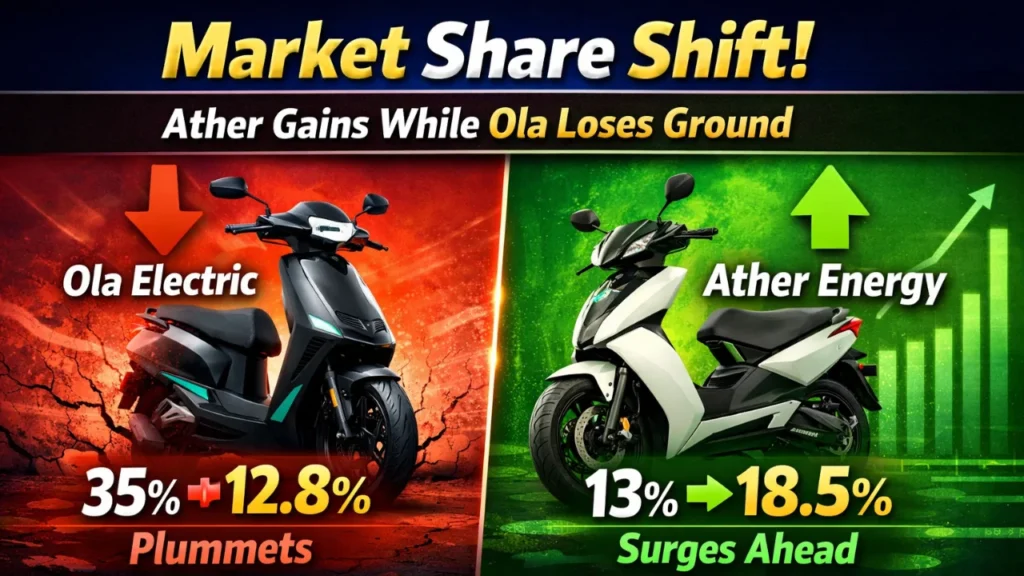
Perhaps the most dramatic shift in India’s EV scooter segment happened in March 2026 with market share numbers. Therefore, these figures deserve serious attention from anyone tracking EV stocks or planning a scooter purchase.
| Brand | Earlier Market Share | March 2026 Market Share | Direction |
|---|---|---|---|
| Ola Electric | 30-35% | 12.8% | Down significantly |
| Ather Energy | ~13% | 18.5% | Up strongly |
This is not a minor fluctuation. On the contrary, Ola Electric lost more than half its market share in just a few months. Meanwhile, Ather Energy nearly doubled its share. Furthermore, this trend reflects a broader shift in consumer preference toward brands that consistently deliver on quality and service.
Why Ola Electric Still Has a Fighting Chance
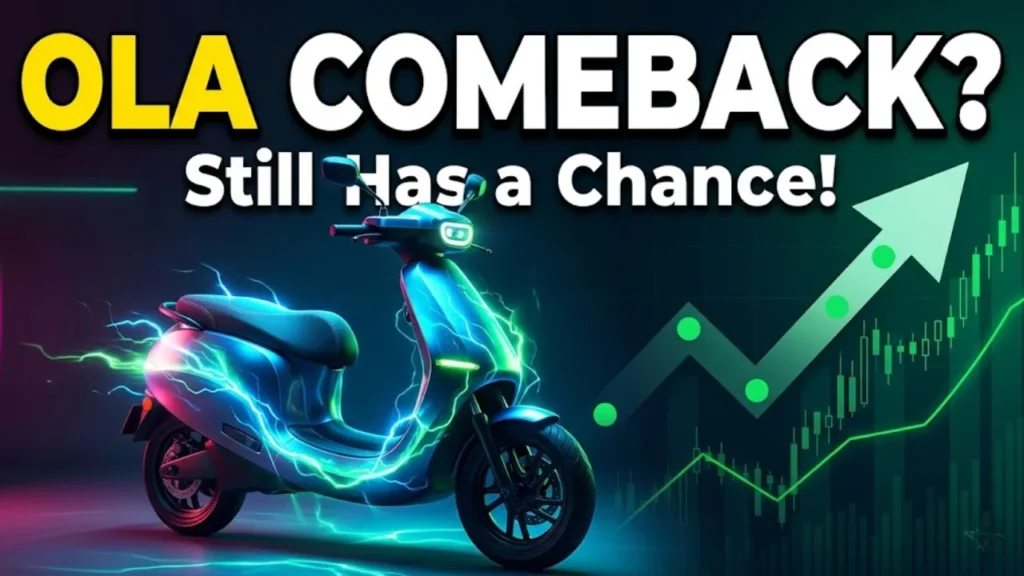
Despite the rough numbers, Ola Electric is not down and out. In fact, the company has made some very ambitious moves that could reshape its future significantly.
First and foremost, Ola has poured approximately Rs 5,300 crore into R&D, manufacturing, and battery technology. Moreover, this is not just factory spending. The company has built a deeply vertical integration model, handling motors, batteries, cells, and software entirely in-house. As a result, this structure gives Ola powerful long-term cost advantages that most competitors simply cannot match.
Additionally, on the cost side, Ola has already reduced its operating expenses from Rs 840 crore down to Rs 484 crore. Furthermore, the company targets bringing that figure down to Rs 250-300 crore. Consequently, if this cost reduction plan succeeds, the margin story becomes very attractive.
On the product side, Ola has already deployed its 4680 Bharat Cells and is preparing to launch new 46100 LFP cells. In addition, the recently launched S1 X+ 5.2 kWh variant signals that the product pipeline is still alive and evolving. Therefore, the long-term innovation story remains compelling.

| Ola Electric Strengths | Details |
|---|---|
| R&D Investment | ~Rs 5,300 crore |
| Vertical Integration | Motors, batteries, cells, software |
| Gross Margin Target | 35% to 40% by FY27 |
| Cost Reduction | Rs 840 crore down to Rs 484 crore, targeting Rs 250-300 crore |
| Battery Innovation | 4680 Bharat Cells deployed, 46100 LFP coming |
| New Product | S1 X+ 5.2 kWh launched |
Why Ather Energy Looks Like the Stronger Bet Right Now

While Ola is building for the future, Ather Energy is winning in the present. Moreover, the numbers back this up across every major performance area.
To begin with, Ather posted 50% year-on-year growth in unit sales. Furthermore, this growth is not happening by accident. The company has nailed demand forecasting, pricing strategy, and cost control all at the same time. Consequently, this kind of execution is exactly what investors love to see.
The Rizta scooter is a standout success story driving much of this growth. Additionally, Ather’s retail network is expanding from 600 stores toward a target of 700. Meanwhile, an impressive 91% ProPack attachment rate shows that customers are not just buying scooters. They are buying into the full Ather ecosystem, including software, charging infrastructure, and services.
Moreover, Ather’s EBITDA is hovering close to breakeven, which is a significant milestone for any EV company at this stage. Therefore, profitability is no longer a distant dream for Ather. In fact, it looks like the next logical step.
| Ather Energy Strengths | Details |
|---|---|
| Sales Growth | 50% year-on-year |
| Key Product | Rizta scooter driving strong demand |
| Retail Expansion | 600 stores, targeting 700 |
| ProPack Attachment | 91% of buyers choosing ProPack |
| EBITDA Status | Close to breakeven |
| Gross Margin | 25% and improving |
Customer Trust: The Invisible Factor That Changes Everything
Beyond sales figures and margins, customer trust plays a huge role in long-term brand survival. However, this is exactly where Ola Electric has faced its biggest challenge in recent months.
Service issues damaged Ola’s reputation significantly. On the positive side, the company has made visible improvements. For instance, service backlog timelines dropped from 14 days down to just 7-8 days. Additionally, Ola now claims an 80% same-day resolution rate for service complaints. Therefore, the recovery effort is real, even if trust takes longer to rebuild than it takes to lose.
On the other hand, Ather Energy has consistently maintained strong customer satisfaction scores. Moreover, the brand focuses on building a holistic ownership experience through software updates, charging network expansion, and responsive retail support. Consequently, Ather customers tend to become genuine brand advocates, which is a powerful and underrated growth driver.
In short, Ola is actively fixing trust. Meanwhile, Ather is deepening it. These are two very different positions in the trust journey, and both matter enormously for future growth.
Who Should You Back in 2026?
Both companies have legitimate claims to relevance in India’s EV future. However, their timelines are completely different. Therefore, the right choice depends entirely on your investment horizon or buying decision.

Ola Electric represents future potential. The vertical integration strategy, massive battery R&D investment, and aggressive margin targets could make it a dominant force by FY27 or FY28. However, execution must improve quickly, and service trust needs to be rebuilt urgently. Meanwhile, Ather Energy is the present winner. It is growing fast, executing well, approaching profitability, and building deeper customer loyalty every month.
Consequently, if you want a company that is working right now, Ather looks stronger. On the other hand, if you are willing to bet on a longer-term transformation with higher potential upside, Ola remains an interesting watch. In either case, India’s EV revolution is just getting started, and both brands will shape how it unfolds.
FAQs
Which company sold more EV scooters in Q3 FY26, Ola Electric or Ather Energy?
Ather Energy sold approximately 68,000 units in Q3 FY26, which is nearly double the 32,680 units sold by Ola Electric during the same period.
What is Ola Electric’s current market share in India’s EV scooter segment?
As of March 2026, Ola Electric holds approximately 12.8% market share, which is a significant drop from its earlier 30-35% dominance.
Why is Ather Energy gaining market share in 2026?
Ather Energy is gaining market share because of strong product demand, especially for the Rizta scooter, 50% year-on-year sales growth, expanding retail presence, and a high customer satisfaction rate driven by its ecosystem approach.
Is Ola Electric profitable in FY26?
No, Ola Electric is not yet profitable. In Q3 FY26, the company reported an EBITDA of -Rs 323 crore and a PAT of -Rs 487 crore. However, the company is targeting significant cost reductions and aims for gross margins of 35-40% by FY27.
What is the 4680 Bharat Cell that Ola Electric has developed?
The 4680 Bharat Cell is Ola Electric’s in-house developed battery cell designed to improve energy density and reduce costs. The company has already deployed this cell in its vehicles and is also working on a next-generation 46100 LFP cell for future products.
SEE ALSO:
- Electric Two-Wheelers FY26: 14 Lakh Sales, Top Brands & EV Market Growth India
- River Mobility New EV Plant in India, RX02 & RX03 Launch Plans, Yamaha Partnership Explained
- Electric Two-Wheelers FY26: 14 Lakh Sales, Top Brands & EV Market Growth India
- Why EV Scooters Are Booming in India 2026: Cost Savings, Features & Future Growth