Nissan is fighting back. After years of financial turbulence, the Japanese automaker has launched an ambitious turnaround strategy under new CEO Ivan Espinosa. At the heart of this plan lies a bold vision: transforming Nissan into a company defined by artificial intelligence and next-generation vehicle technology. Moreover, the plan involves serious cost-cutting, factory closures, and a sharp focus on electric and hybrid vehicles. So, is this the comeback story Nissan needs, or is it just another promise on paper?
Contents
- 1 Nissan’s “AI-Defined Vehicles” Strategy Explained
- 2 Nissan Cost-Cutting Plan: Factory Closures and Job Cuts
- 3 Nissan Electric Vehicle Plans: Juke EV and Hybrid Rogue
- 4 Nissan Sales Targets for Japan, US, and China by 2030
- 5 Nissan and Wayve Partnership: Self-Driving Technology Push
- 6 Challenges Facing Nissan’s Recovery Plan
- 7 Can Ivan Espinosa Turn Nissan Around?
- 8 FAQs
Nissan’s “AI-Defined Vehicles” Strategy Explained
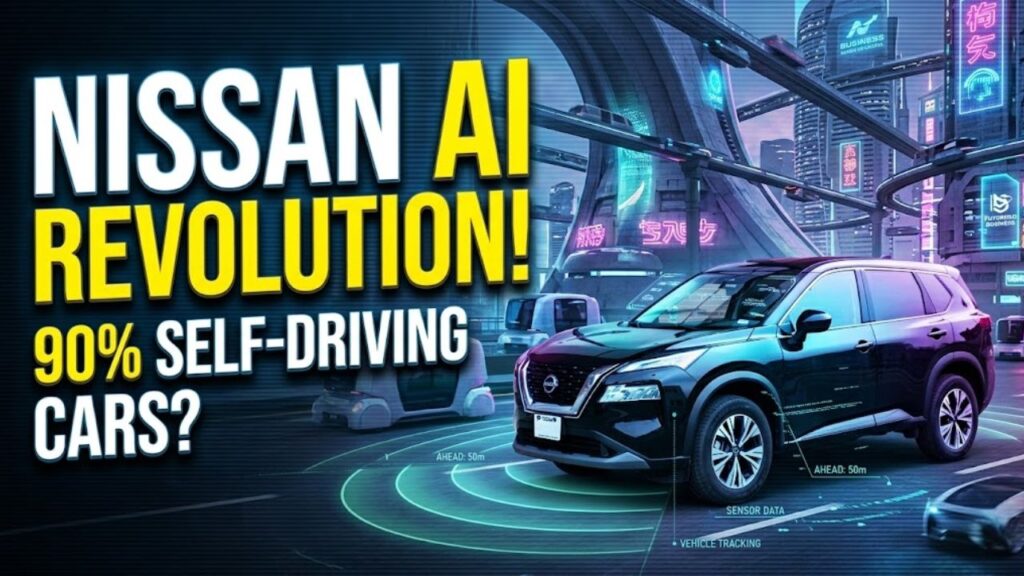
Nissan’s new strategy centers on something truly forward-thinking. The company aims to integrate autonomous and self-driving technology into 90% of its future vehicle lineup. Additionally, the entire development process will be guided by artificial intelligence, making Nissan one of the few automakers to fully embrace AI at every level of vehicle design and production.
Furthermore, Nissan plans to trim its bloated model range from 56 models down to 45, cutting roughly 20% of its lineup. This is not just about saving money. It is also about redirecting investment toward models that actually sell well and generate profits. Consequently, customers can expect fewer but far more refined and technologically advanced vehicles from the brand going forward.
Nissan Cost-Cutting Plan: Factory Closures and Job Cuts
The turnaround plan comes with some painful realities. Nissan has announced the closure of seven manufacturing facilities worldwide. In addition, around 20,000 jobs are expected to be cut as the company restructures its global operations. These are not small numbers, and they reflect just how seriously Nissan is taking the need to reduce operational complexity and overhead costs.
However, it is worth noting that these measures are not unusual for a company in Nissan’s position. Many global automakers have gone through similar restructuring phases when facing rising competition and shrinking margins. Therefore, while the job losses are deeply concerning, they represent a calculated move to ensure Nissan’s long-term survival.
| Feature | Details |
|---|---|
| CEO | Ivan Espinosa |
| Model Reduction | 56 models reduced to 45 |
| Factory Closures | 7 factories to be shut down |
| Job Cuts | Approximately 20,000 |
| Autonomous Tech Target | 90% of future vehicles |
Nissan Electric Vehicle Plans: Juke EV and Hybrid Rogue
On the technology front, Nissan is making some genuinely exciting moves. The company has confirmed plans for a fully electric Nissan Juke, which will be built in the United Kingdom and targeted primarily at European buyers. This is a smart market decision, especially as Europe continues to push aggressively toward EV adoption.
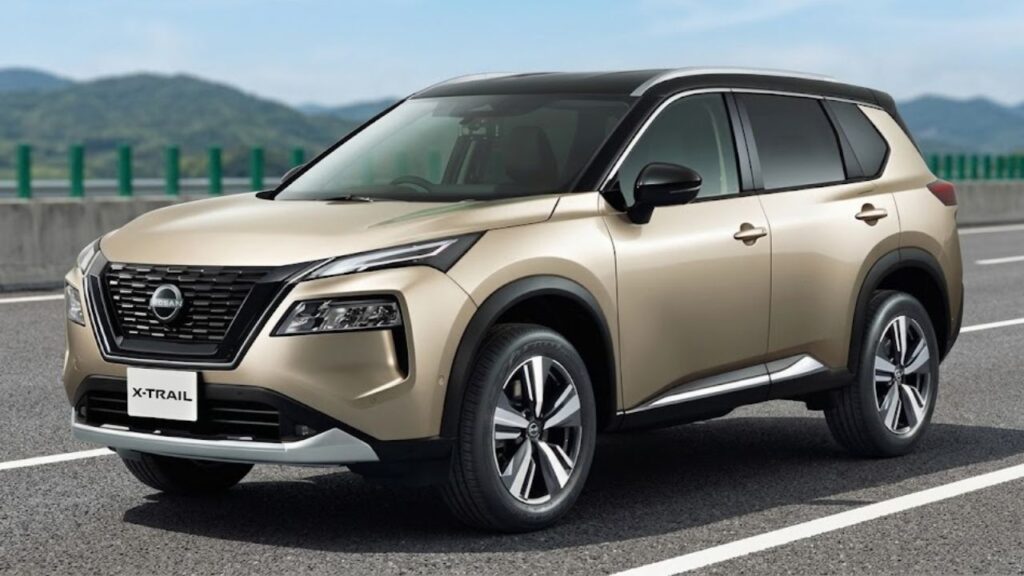
Meanwhile, for the crucial North American market, Nissan is developing a new hybrid version of the Rogue and X-Trail SUV. This makes a lot of sense strategically because American consumers still show strong preference for hybrid powertrains over fully electric options. Therefore, by covering both ends of the electrification spectrum, Nissan is hedging its bets wisely across different markets.
Nissan Sales Targets for Japan, US, and China by 2030
Nissan has set some seriously ambitious sales targets as part of this plan. In Japan, the company wants to add 550,000 additional unit sales annually by 2030. Additionally, Nissan is targeting 1 million sales each in both the United States and China. These three markets represent the backbone of Nissan’s global revenue strategy.

However, hitting these numbers will not be easy. Competition in China from domestic EV brands like BYD and NIO is fierce. Moreover, the US market is increasingly dominated by homegrown giants like Ford, GM, and Tesla. On the other hand, Nissan does carry strong brand recognition in all three regions, which gives the company a meaningful platform to build from.
| Market | Sales Target by 2030 |
|---|---|
| Japan | +550,000 units annually |
| United States | 1 million units |
| China | 1 million units |
Nissan and Wayve Partnership: Self-Driving Technology Push
One of the more intriguing aspects of Nissan’s AI strategy involves its existing partnership with Wayve, a British autonomous driving technology company. Nissan signed a technology deal with Wayve last year, and consequently, the current autonomous vehicle push could bring significant new business to Wayve’s growing platform. In addition, this collaboration signals that Nissan is serious about building real self-driving capabilities rather than simply making bold claims about AI.
Furthermore, partnerships like this one are increasingly important in the automotive world. Developing autonomous technology in-house from scratch is extraordinarily expensive. Therefore, by teaming up with specialized AI and AV companies, Nissan can accelerate its timeline while managing costs more efficiently.
Challenges Facing Nissan’s Recovery Plan
Despite all the optimism, Nissan faces some very real headwinds. First and foremost, the company is dealing with the difficult combination of rising costs and declining scale. Moreover, Chinese EV manufacturers have dramatically disrupted the global market with aggressive pricing and rapid innovation. As a result, Nissan is under intense pressure to keep pace in battery-electric technology, an area where the company currently lags behind several competitors.
Additionally, analysts remain cautious. Masahiro Akita, a respected industry analyst, has acknowledged that while the plan is reasonable on paper, long-term growth and a successful turnaround are far from guaranteed. In other words, having a good strategy and actually executing it are two very different things. Consequently, investors and industry watchers will be monitoring Nissan’s progress closely over the next few years.
Can Ivan Espinosa Turn Nissan Around?
Ivan Espinosa steps into the CEO role at a genuinely challenging moment in Nissan’s history. However, the plan he has put forward shows a clear-eyed understanding of where the company needs to go. By focusing on AI, EVs, and a leaner model lineup, Nissan is aligning itself with the direction the entire automotive industry is heading. Moreover, the partnerships, the market-specific strategies, and the investment realignment all point toward a leadership team that understands both the urgency and the complexity of the task ahead.
On the other hand, ambition alone does not guarantee results. The road ahead remains uncertain, and success will ultimately depend on execution. Nevertheless, for a brand that has struggled for years, this plan at least represents a credible and coherent vision for the future.
FAQs
What is Nissan’s new turnaround strategy?
Nissan’s new turnaround strategy, led by CEO Ivan Espinosa, focuses on developing “AI-defined vehicles,” integrating autonomous technology into 90% of its future cars, reducing its model lineup from 56 to 45, closing 7 factories, cutting around 20,000 jobs, and pushing heavily into electric and hybrid vehicles.

How many jobs will Nissan cut as part of its restructuring plan?
Nissan plans to cut approximately 20,000 jobs globally as part of its cost-reduction and restructuring efforts, alongside the closure of seven manufacturing facilities worldwide.
What is the new electric Nissan Juke?
The new electric Nissan Juke is a fully battery-electric version of the popular compact SUV, planned specifically for the European market and set to be manufactured in the United Kingdom.
What is Nissan’s relationship with Wayve?
Nissan signed a technology partnership deal with Wayve, a UK-based autonomous driving technology company, last year. This collaboration supports Nissan’s broader push to integrate self-driving and AI technology into its future vehicles.
What are Nissan’s sales targets by 2030?
Nissan aims to increase annual sales in Japan by 550,000 units by 2030, while also targeting 1 million vehicle sales each in both the United States and China as part of its long-term growth strategy.
SEE ALSO:
- India Automotive Metal Forming Market Growth: $95B Opportunity by 2030
- Hyundai Breaks Sales Record in March 2026: MG Grows 19% & Announces Price Hike from April 1
- Toyota Innova Hycross Facelift 2026: Launch Date, Price, Features & Hybrid Specs Revealed
- Maruti Quickstop Service: Office & Airport Car Servicing Revolution by Maruti Suzuki
- Skoda Chinese market Exits 2026: Sales Crash, EV Competition & Future Strategy Explained
- Mahindra SUV Price Hike April 2026: Thar, Scorpio-N Costlier, XUV 7XO Safe – Full Details
- Nissan India Sales March 2026: 10,388 Units, 98% Growth, Gravite & Magnite Boost
- Volkswagen Taigun Facelift Launched Soon: New Design, 8-Speed AT, Features & Launch Date
(Source)