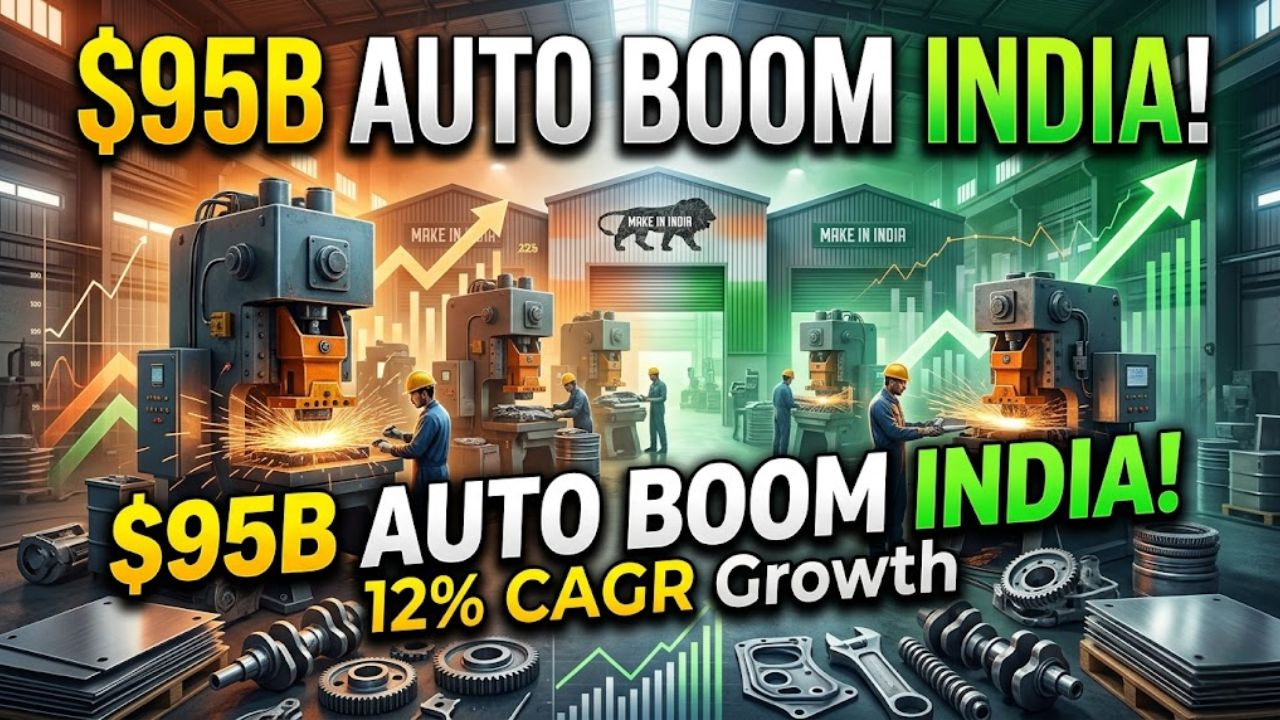
India’s automotive metal forming market is no longer just a domestic story. In fact, it has grown into one of the most exciting manufacturing opportunities on the global map. With a current market size crossing $80 billion in FY25 and an expected surge to $90–95 billion by FY30, this sector is expanding at a solid 12% CAGR. Moreover, what makes this growth truly remarkable is India’s rapid transformation from a net importer to a net exporter of auto components. So, if you’re tracking where smart capital is flowing right now, the answer is clear: India’s metal forming industry.
India Automotive Metal Forming Market Size and Growth Outlook
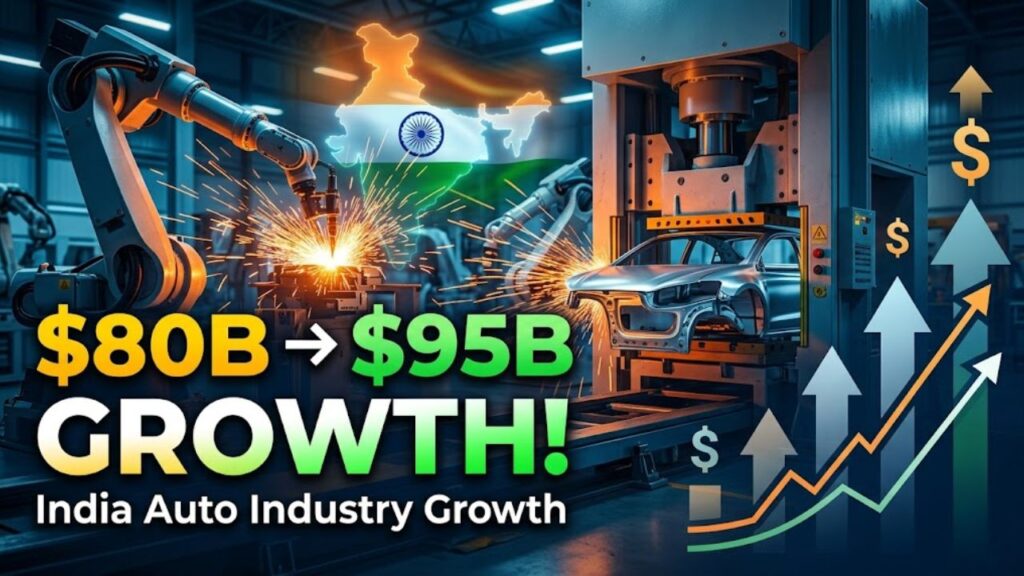
The numbers tell a compelling story. Currently valued at over $80 billion in FY25, the India automotive metal forming market is on a strong upward trajectory. Additionally, exports have already touched approximately $23 billion in FY25, which signals just how fast India is gaining ground as a preferred global manufacturing destination. Furthermore, with a projected CAGR of around 12%, the market is expected to cross $90–95 billion by FY30. Therefore, both domestic demand and export momentum are working together to fuel this remarkable growth.
| Parameter | Details |
|---|---|
| Current Market Size (FY25) | $80+ billion |
| Projected Market Size (FY30) | $90–95 billion |
| Growth Rate (CAGR) | ~12% |
| Exports (FY25) | ~$23 billion |
| Industry Shift | Net importer to net exporter |
Key Growth Drivers Behind India’s Metal Forming Boom
So, what exactly is powering this growth? Several strong fundamentals are coming together at the right time. First and foremost, India offers strong cost competitiveness that no other emerging market can easily replicate. In addition, the country has a deep pool of skilled engineering talent that global OEMs and Tier-1 suppliers are actively tapping into. Moreover, India’s well-established supplier ecosystem gives manufacturers a ready-made foundation to scale quickly. Consequently, rising global demand and India’s growing export capabilities are reinforcing each other, creating a powerful growth cycle that is hard to ignore.
Core Manufacturing Processes Driving the Industry Forward
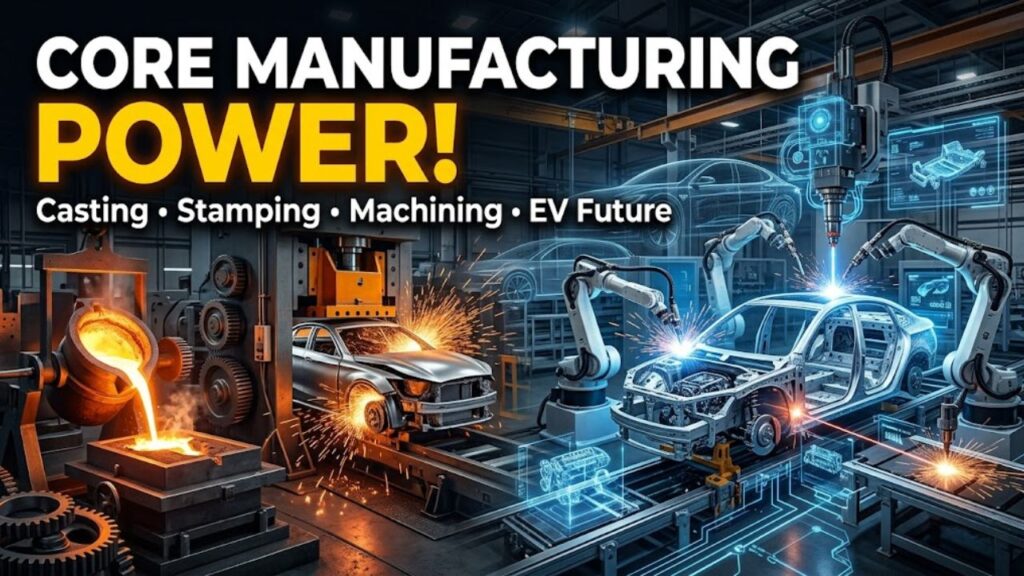
At the heart of this sector are four critical manufacturing processes: casting, forming, stamping, and machining. Interestingly, these are not processes tied exclusively to traditional ICE vehicles. On the contrary, they are equally vital for electric vehicle production. Therefore, as the global auto industry transitions from Internal Combustion Engine vehicles to EVs, Indian manufacturers find themselves well-positioned to serve both segments simultaneously. Meanwhile, this dual relevance gives the sector a unique resilience that many other manufacturing categories simply do not have.
Industry Transformation: From Scale-Driven to Capability-Driven Growth
One of the most significant shifts happening right now is the move from scale-driven manufacturing to capability-driven growth. Previously, the game was about producing high volumes at low cost. However, that narrative is changing fast. Today, the focus has firmly shifted toward precision manufacturing, lightweight components, and complex engineering solutions. Additionally, process specialists are becoming far more valuable than pure volume players. Consequently, companies that invest in deep technical expertise are emerging as the clear winners in this new competitive landscape.
Koushik Bhattacharyya of Avendus Capital summed it up well, noting that the sector is moving toward capability-led consolidation, where manufacturing expertise is becoming the key differentiator. In other words, it’s no longer enough to just be big. Therefore, companies must now be genuinely good at what they do to attract serious investment and long-term partnerships.
Global Supply Chain Shifts: Why India Is Winning Big
The global supply chain is undergoing a structural reset, and India is emerging as one of its primary beneficiaries. As global OEMs and Tier-1 suppliers diversify their sourcing away from traditional hubs, India stands out for three core reasons: lower costs, a skilled workforce, and strong infrastructure. Moreover, geopolitical tensions and supply chain disruptions of recent years have accelerated this diversification. As a result, India is not just attracting incremental business but actually replacing entrenched suppliers in key markets. Furthermore, this trend is expected to deepen significantly over the next five years.
ICE Component Opportunity: India as the Last Man Standing
Here is a very interesting angle that many investors and analysts are now paying close attention to. As global players scale back their ICE investments in anticipation of the EV transition, India is quietly stepping in to fill that gap. Components like crankshafts, gears, and axles still have massive global demand, and very few countries are willing to invest in their production. Consequently, India is emerging as what industry insiders are calling the “last man standing” in ICE components. Additionally, this creates a window of opportunity that could generate significant export revenues over the next decade, even as the EV shift gradually unfolds.
Investment Trends: Private Equity and Strategic Capital Flow In
Smart money is clearly noticing this opportunity. Global private equity firms and strategic investors are actively increasing their focus on India’s automotive metal forming sector. However, they are not chasing just any company. Instead, investors are specifically targeting export-oriented businesses, scalable manufacturing platforms, and companies with deep technical expertise. Moreover, deal activity in this space has been consistently rising, reflecting a broader confidence in India’s long-term manufacturing story. In addition, as capability-led consolidation picks up pace, more M&A activity is expected in the near future.
| Investment Focus Area | Why It Matters |
|---|---|
| Export-oriented companies | Direct exposure to global demand growth |
| Scalable manufacturing platforms | Ability to grow without proportional cost increase |
| Deep technical expertise | Key differentiator in capability-driven market |
| ICE component specialists | Last-mover advantage as global players exit |
Why Metal Forming Is One of India’s Most Resilient Segments
Overall, the India automotive metal forming market is shaping up to be one of the most resilient and high-growth segments in the entire manufacturing landscape. Domestic vehicle demand continues to grow steadily, export momentum is building rapidly, and global supply chain realignment is creating structural tailwinds. Furthermore, the sector’s relevance across both ICE and EV platforms ensures that it will remain critical regardless of how fast the automotive transition happens. Therefore, for investors, manufacturers, and policymakers alike, this is a sector that deserves serious, sustained attention in the years ahead.
FAQs
What is the current size of the India automotive metal forming market?
The India automotive metal forming market is currently valued at over $80 billion in FY25 and is expected to grow to $90–95 billion by FY30, driven by domestic demand and rising exports.
What is the expected CAGR of India’s automotive metal forming market?
The market is projected to grow at approximately 12% CAGR, making it one of the fastest-growing segments in India’s broader manufacturing sector.
How much does India export in automotive metal forming components?
India’s automotive component exports reached approximately $23 billion in FY25, reflecting the country’s growing position as a preferred global manufacturing hub.
Which core processes are critical in the automotive metal forming industry?
The four core processes are casting, forming, stamping, and machining. These processes are essential for both ICE (Internal Combustion Engine) vehicles and Electric Vehicles (EVs).
Why is India called the “last man standing” in ICE components?
As global players reduce their investments in ICE component manufacturing due to the EV transition, India is stepping in to fill the gap, particularly in high-demand parts like crankshafts, gears, and axles, making it the dominant supplier in this space.
SEE ALSO:
- Hyundai Breaks Sales Record in March 2026: MG Grows 19% & Announces Price Hike from April 1
- Skoda Chinese market Exits 2026: Sales Crash, EV Competition & Future Strategy Explained
- Toyota Urban Cruiser Ebella India Launch April 2026: 543km Range, Price, Features & Specs
- Best EV Cars in India Under 10 Lakhs 2026: Tiago, Comet & Punch EV Guide
- New Car Launches April 2026 India: Taigun Facelift, MG Majestor, CLA Electric, Toyota Ebella & Nissan Tekton