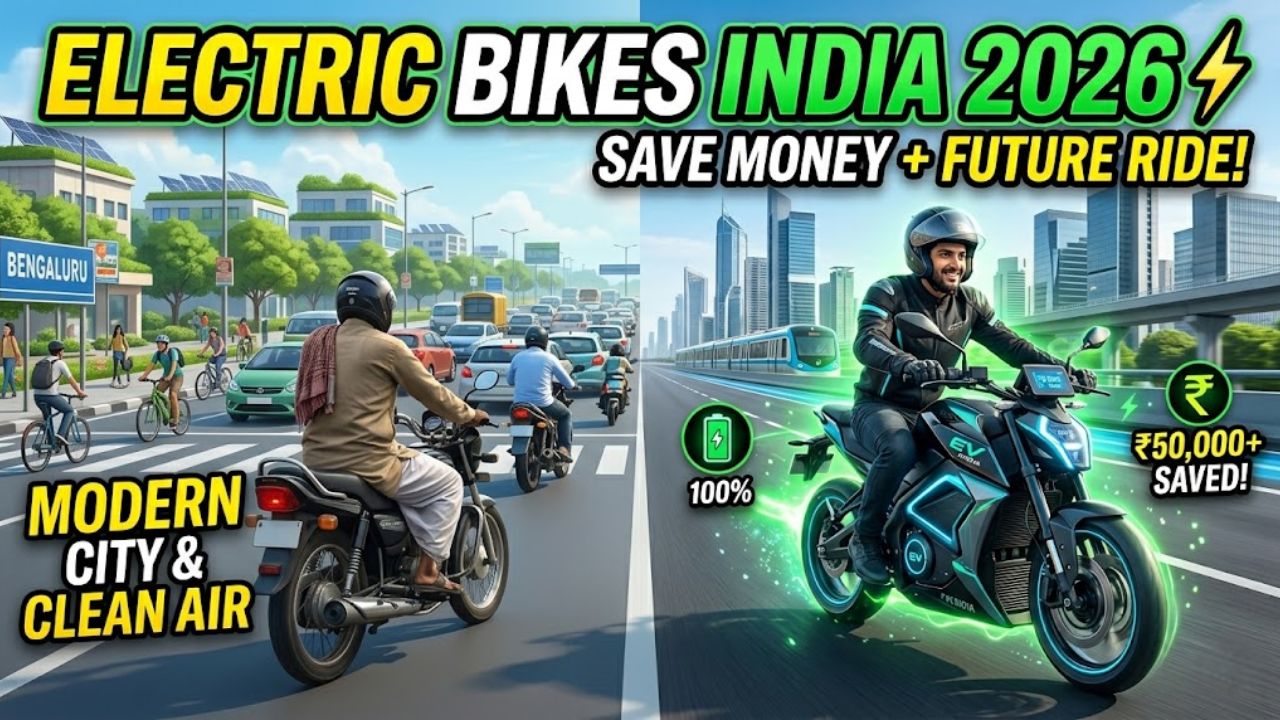
India is at a turning point in urban mobility. With fuel prices climbing and city traffic getting worse every year, more commuters are now looking for smarter, cleaner alternatives. Electric bikes are quickly becoming one of the most practical solutions to India’s daily commute problems. Moreover, they are affordable, eco-friendly, and surprisingly easy to maintain. Whether you ride through the busy streets of Bengaluru or the narrow lanes of Old Delhi, an electric bike can genuinely change how you travel. In this article, we break down everything you need to know about electric bikes in India, from costs and types to challenges and future trends.
What Is an Electric Bike and How Does It Work
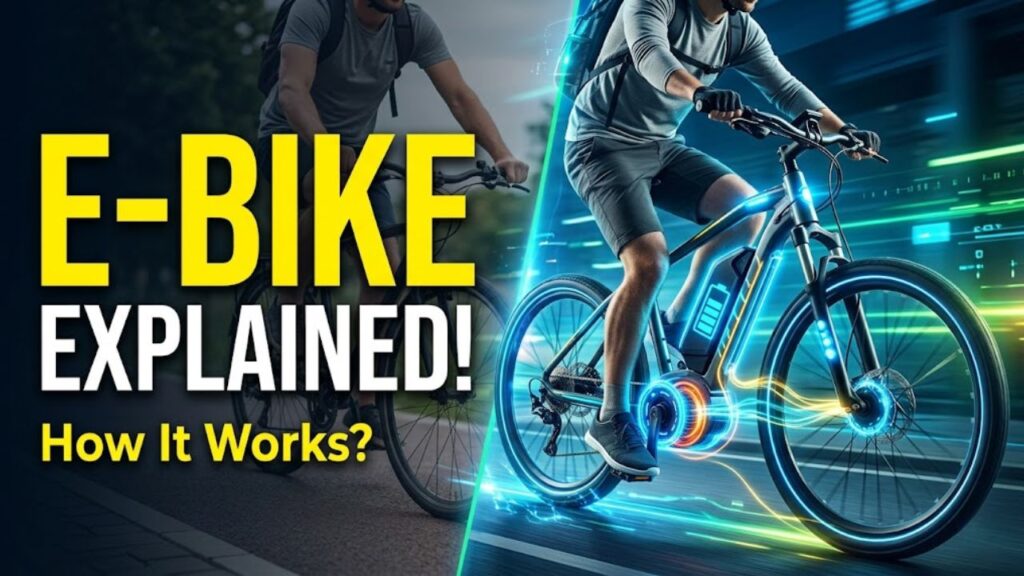
An electric bike, commonly called an e-bike, is essentially a bicycle fitted with a battery-powered motor, a rechargeable lithium-ion battery, and either a pedal-assist system or a throttle mode. Unlike electric scooters, most e-bikes still require at least some pedaling. Consequently, this makes them more energy-efficient and considerably lighter than scooters. The pedal-assist system, also known as PAS, activates the motor only when you pedal, which extends the battery range significantly. Throttle-based e-bikes, on the other hand, can run without any pedaling at all, though they tend to consume more battery power in the process.
Why Electric Bikes Are Gaining Momentum in India
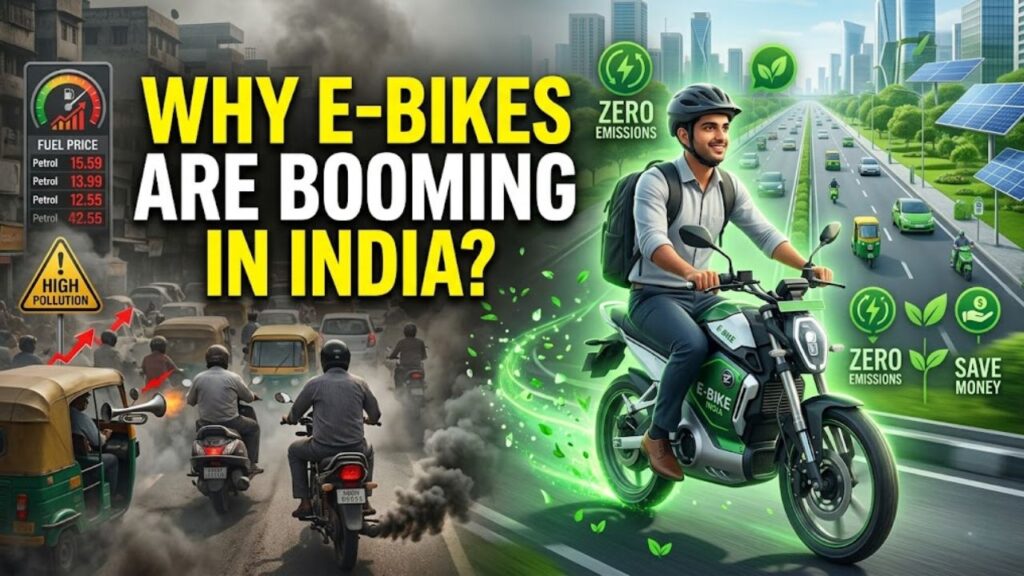
There are several strong reasons why e-bikes are growing in popularity across Indian cities. First and foremost, rising fuel costs are pushing commuters to explore cheaper alternatives. Petrol prices in India have increased steadily over the past few years, making daily travel quite expensive for middle-class households. In contrast, an electric bike costs just ₹0.10 to ₹0.20 per kilometer, compared to ₹2 to ₹4 per kilometer for a petrol two-wheeler. That difference adds up to significant savings over a month or a year.
Additionally, urban congestion in cities like Delhi, Mumbai, and Bengaluru has made commuting extremely frustrating. E-bikes navigate narrow lanes with ease, require very little parking space, and improve last-mile connectivity in areas where public transport does not reach. Furthermore, the Indian government is actively supporting electric mobility through schemes like the FAME India Scheme and various state-level EV policies. These programs offer subsidies and tax benefits, making electric bikes more accessible to everyday buyers.
Moreover, environmental concerns are also pushing this shift. India ranks among the largest contributors to urban air pollution globally. Therefore, e-bikes, which produce zero tailpipe emissions, are becoming a responsible choice for eco-conscious commuters who want to reduce their carbon footprint without giving up personal mobility.
Types of Electric Bikes Available in India
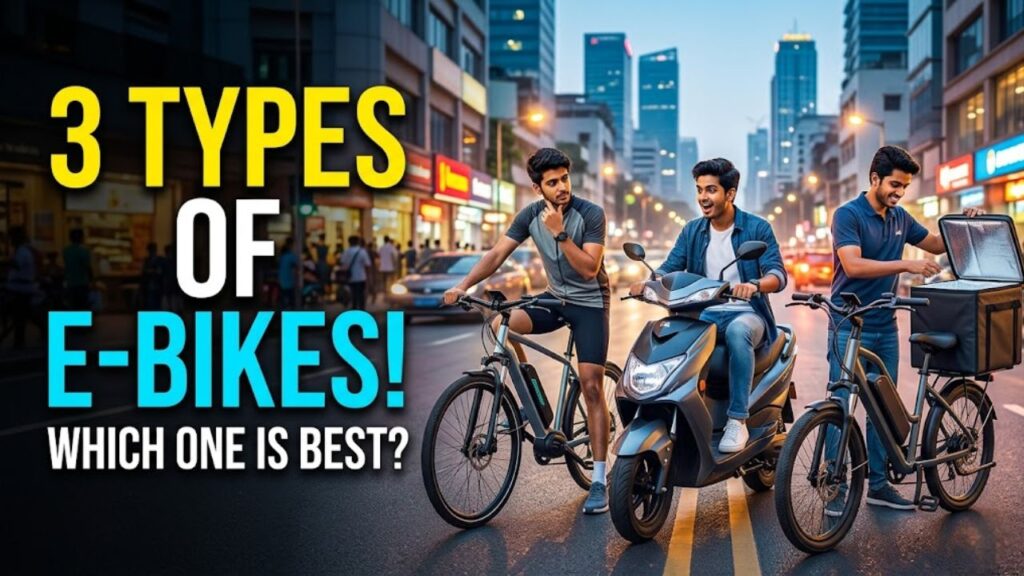
Not all electric bikes are the same, and understanding the different types helps you make a better buying decision. Pedal-assist e-bikes, also known as pedelecs, are the most energy-efficient option available. The motor in these bikes activates only when you pedal, which means the battery lasts longer. Additionally, if the motor output stays under 250W, you do not need a license or registration to ride them in India, which makes them very convenient for students and daily office commuters.
Throttle-based e-bikes, however, work differently. They run without pedaling, similar to a scooter, but they consume battery power faster. They are a good choice for riders who prefer a more relaxed riding experience. Meanwhile, cargo and utility e-bikes are increasingly popular among delivery startups and last-mile logistics companies. Businesses like quick-commerce and hyperlocal delivery services are adopting these bikes rapidly because they are cost-effective and easy to operate in tight urban spaces.
Electric Bike Price, Range and Practicality in India
One of the biggest advantages of electric bikes is their overall affordability and low running cost. Here is a quick overview of what you can expect:
| Feature | Details |
|---|---|
| Price Range | ₹25,000 to ₹1.5 lakh |
| Charging Time | 3 to 6 hours |
| Range Per Charge | 25 to 100 km |
| Running Cost | ₹0.10 to ₹0.20 per km |
| Maintenance | Minimal, no engine oil needed |
| Battery Replacement Cost | ₹8,000 to ₹20,000 |
In addition, maintenance costs are very low compared to petrol bikes because e-bikes have fewer moving parts and require no engine oil changes. Popular Indian brands currently leading this space include Hero Lectro, EMotorad, and Ninety One Cycles. These brands offer reliable options across different price segments, making it easier for buyers to find something that fits their budget.
Challenges Slowing Down Electric Bike Adoption in India
Despite all the benefits, electric bikes still face some real challenges in India. First, awareness outside major metro cities remains quite limited. Many buyers in smaller towns and rural areas are still unfamiliar with how e-bikes work or where to service them. Furthermore, the charging infrastructure across the country is still developing, which makes longer-distance travel on an e-bike less convenient.
There is also a perception problem. Many riders still view e-bikes as less powerful or less reliable than petrol scooters, which holds back adoption among performance-conscious buyers. Additionally, battery replacement costs ranging from ₹8,000 to ₹20,000 can feel like a significant expense, especially for budget buyers. However, as battery technology improves and production scales up, these costs are expected to drop considerably in the coming years.
The Future of Electric Bikes in India
The outlook for electric bikes in India is genuinely exciting. Several powerful trends are converging to push e-bike adoption forward at a faster pace. Smart city initiatives across the country are creating better cycling infrastructure, which directly benefits e-bike users. Meanwhile, the rapid growth of the gig economy means that more delivery workers are looking for low-cost, efficient vehicles for daily use. E-bikes fit that need perfectly.
Moreover, as battery costs continue to fall globally, the price of e-bikes in India will also drop, making them accessible to a much wider audience. Integration with public transport systems, such as first-mile and last-mile connectivity near metro stations, is another area where e-bikes can play a major role. Industry analysts, therefore, expect exponential growth in the Indian e-bike market over the next five to seven years. Consequently, now is actually a great time to consider switching to an electric bike before the market gets crowded and prices shift.
Are Electric Bikes Worth Buying in India Right Now
For anyone commuting between 5 and 15 kilometers daily, an electric bike is honestly one of the smartest investments you can make right now. It costs far less to run than a petrol bike, requires minimal maintenance, and helps you avoid the stress of traffic and parking. Additionally, with government subsidies still available under various EV schemes, the effective purchase price is lower than ever. In short, electric bikes are not just a trend. They are a practical, scalable solution to India’s growing urban transport challenges, and the timing to adopt one has never been better.
FAQs
What is the price range of electric bikes in India?
Electric bikes in India are available in a price range of ₹25,000 to ₹1.5 lakh depending on the brand, battery capacity, and features. Popular affordable options come from brands like Hero Lectro, EMotorad, and Ninety One Cycles.
Do I need a license to ride an electric bike in India?
If your electric bike has a motor output of 250W or less and a top speed of 25 km/h or below, you do not need a license or registration in India. However, higher-powered e-bikes may require registration and a valid driving license.
How far can an electric bike travel on a single charge?
Most electric bikes in India offer a range of 25 to 100 kilometers per charge, depending on the battery size, rider weight, terrain, and riding mode. Pedal-assist mode generally gives a longer range than throttle mode.
What are the main challenges of owning an electric bike in India?
The main challenges include limited service centers outside metro cities, evolving charging infrastructure, battery replacement costs between ₹8,000 and ₹20,000, and a general perception that e-bikes are less powerful than petrol scooters.
Is the Indian government providing subsidies for electric bikes?
Yes, the Indian government supports electric bike adoption through the FAME India Scheme and various state-level EV policies. These schemes offer direct subsidies and tax benefits that effectively reduce the purchase price of electric bikes for eligible buyers.
SEE ALSO:
- Ather EL01 Electric Scooter Launch 2026: Price, Features & BaaS Explained
- River Mobility New EV Plant in India, RX02 & RX03 Launch Plans, Yamaha Partnership Explained
- Planning to Buy EV? Simple Energy Gives Free 2-Year Warranty on Gen 2 Scooters
- Best Electric Scooters Under ₹1 Lakh in India 2026 Complete Guide
- Bajaj Chetak Production Shift: ₹75 Cr Subsidy Issue Sparks Exit from Maharashtra? Full Details